Helicopter Pilot Training in Florida: Requirements, Timeline, and Next Steps
by Ray Deptula
If you’re comparing rotorcraft schools, the most confusing part is often not the flying itself, it’s the logistics. Helicopter pilot training in Florida has clear FAA requirements, a stepped timeline, and a few Florida-specific advantages that make USATS a strong training choice.
This guide explains what you need to start, how the training path usually unfolds, and what to do next so you can move from first lessons to a professional helicopter certificate with confidence.
What helicopter licence requirements really mean
To begin helicopter training in the U.S., you need more than just a desire to fly. The FAA requires:
- A third-class medical certificate or higher, depending on the certificate you pursue.
- English proficiency for all flight training and communications.
- FAA-approved training from a certified flight school, such as Part 141 helicopter programs.
- For international students: eligibility for an M-1 visa, proof of funds, and supporting academic records.
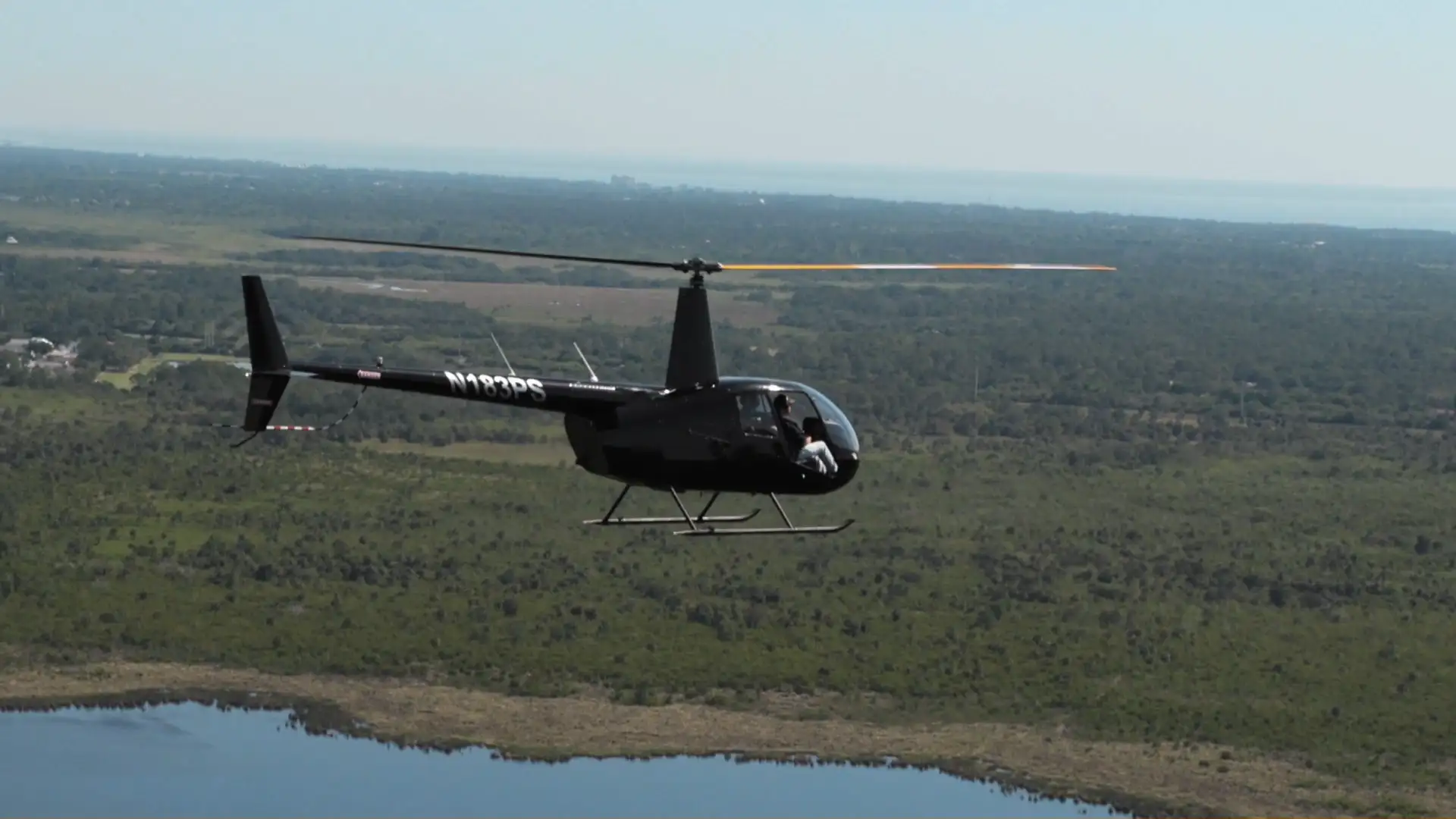
At USATS, we train students in both Robinson R44 and Schweizer S300 helicopters, and our aviation services include on-site TSA fingerprinting and FAA CATS testing to help keep paperwork moving smoothly.
That means your training path is not only about the flight syllabus, it is also about meeting the right administrative and visa requirements before you start logging hours.
The core helicopter training path at USATS
Most students move through these major stages in Florida helicopter training:
1. Private Pilot License (PPL)
The PPL is where you learn the fundamentals of helicopter flight, basic navigation, emergency procedures, and the skills needed to fly safely on your own. At USATS, this is the first step in the rotorcraft path.
2. Instrument Rating (IR)
A helicopter instrument rating trains you to fly safely when visibility drops and weather changes. For many professional rotorcraft careers, this rating is a key requirement, and it is what separates recreational pilots from mission-ready rotorcraft aviators.
3. Commercial Pilot License (CPL)
The CPL is the certification that allows you to get paid for flying. This phase concentrates on advanced helicopter maneuvers, performance management, and commercial decision-making.
4. Instructor certifications (CFI / CFII)
If your goal is to build experience quickly, becoming a flight instructor is a common next step. USATS offers both Certified Flight Instructor and Certified Flight Instructor Instrument training, which help many students log the hours needed for advanced opportunities.
5. Professional Pilot Program
For students who want an all-in-one training path, our Professional Pilot Program bundles the key rotorcraft certificates into one career-ready program. It includes 200 hours of helicopter flight time and meets the SFAR-73 requirements for Robinson R44 instruction.
What the timeline looks like in Florida
Florida is one of the strongest helicopter flight training states because of its weather and centralized support services. At USATS, that translates into fewer weather delays and more consistent scheduling.
Here’s how the phases usually stack up:
- PPL: foundational training and first solo flight.
- IR: instrument procedures, cockpit scans, and weather operations.
- CPL: commercial-level precision, performance, and professional judgment.
- Instructor training: teaching technique, lesson planning, and advanced training standards.
Because every student’s background is different, we avoid exact duration promises. Instead, we focus on steady progress: many students complete each stage in a few months when lessons are scheduled consistently.
Because we operate from Space Coast Regional Airport, students benefit from an environment that is built around flight training instead of an overcrowded general aviation airport.
Why USATS makes helicopter flight training Florida easier
The right flight school can simplify the logistics that often slow rotorcraft students down. At USATS, that support includes:
- Integrated aviation services: on-site FAA CATS testing, TSA fingerprinting, and a FAA Part 145 repair station for helicopter maintenance.
- Modern, rotorcraft-focused fleet: training in Robinson R44 and Schweizer S300 helicopters, the standard machines for professional helicopter programs.
- International student support: specialized guidance for M-1 visa eligibility, document preparation, and enrollment planning.
- Financing options: support from partner-friendly aviation financing programs to help students move forward.
That means you can spend less time juggling paperwork and more time building the right flight experience.
Next steps for prospective rotorcraft students
If you’re ready to move from planning to action, here’s how to make the process smoother:
- Review the helicopter training programs on the USATS page: /helicopter-training/.
- Confirm your eligibility for a medical certificate and, if you are an international student, an M-1 visa.
- Schedule a discovery flight to see the helicopter fleet, meet your instructors, and experience the training environment firsthand.
- Ask our admissions team about current enrollment dates, available financing options, and the best path for your timeline.
Helicopter pilot training in Florida can be more straightforward than it first appears when you have the right school handling the paperwork, scheduling, and aircraft support. At USATS, we help you turn requirements into a clear training plan so you can stay focused on flying.
Ready to move forward? Visit our helicopter training programs page and schedule a discovery flight today.
- Ask about financing and enrollment dates so you can line up your schedule with available seats.
Helicopter pilot training in Florida can feel complicated at first, but with the right school and a clear plan, the steps become much more manageable. USATS combines helicopter licence requirements, FAA-approved programs, and Space Coast logistics into a training experience designed to help you keep moving forward.
Ready to start? Visit our helicopter training programs page and schedule a discovery flight to take the next step.