How Hard Is It to Get a Helicopter License? An Honest 2026 Look
by Ray Deptula
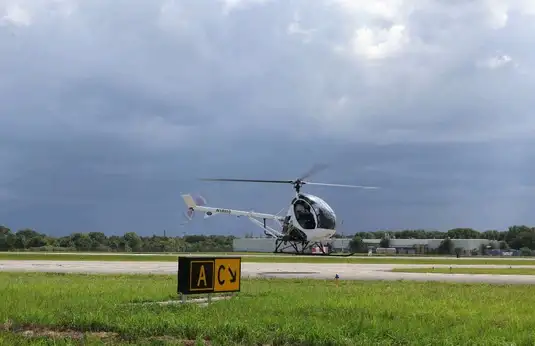
The S300 lifts a few feet off the ramp at Space Coast Regional Airport (KTIX), and for the first time the controls are yours. The nose wanders left. You push a pedal, the helicopter drifts back, you correct with the cyclic, and suddenly you are chasing a painted spot across the concrete while your instructor’s hands wait an inch from the controls. Every new helicopter pilot has this moment, and it answers the question you came here with: how hard is it to get a helicopter license?
Honestly, it is hard in a few specific places and learnable everywhere else. Hovering and coordinating the three controls are the steepest physical skills, and autorotations ask for the most focus. The knowledge test, the checkride and the medical come down to preparation and planning. The commitment is the part to plan hardest for: the time, the money and keeping the gaps between lessons short.
Below, we go through each part of the private helicopter certificate in order of difficulty, so you can start training knowing where the work is.
| Part of the license | How hard it feels | What makes it manageable |
|---|---|---|
| Learning to hover | Hardest at first | Repetition and small pressure inputs |
| Coordinating cyclic, collective and pedals | Hard, then automatic | Learning one control at a time |
| Autorotations | Demanding, high focus | Practice with power recovery to a hover |
| Knowledge test | Study work | Ground training and a clear syllabus |
| Checkride | A known standard | Training to the published tolerances |
| FAA medical | Paperwork for most people | Booking it early |
| Time and money | Often the real obstacle | Flying consistently with a written plan |
Learning to hover is the hardest part, and the FAA says so
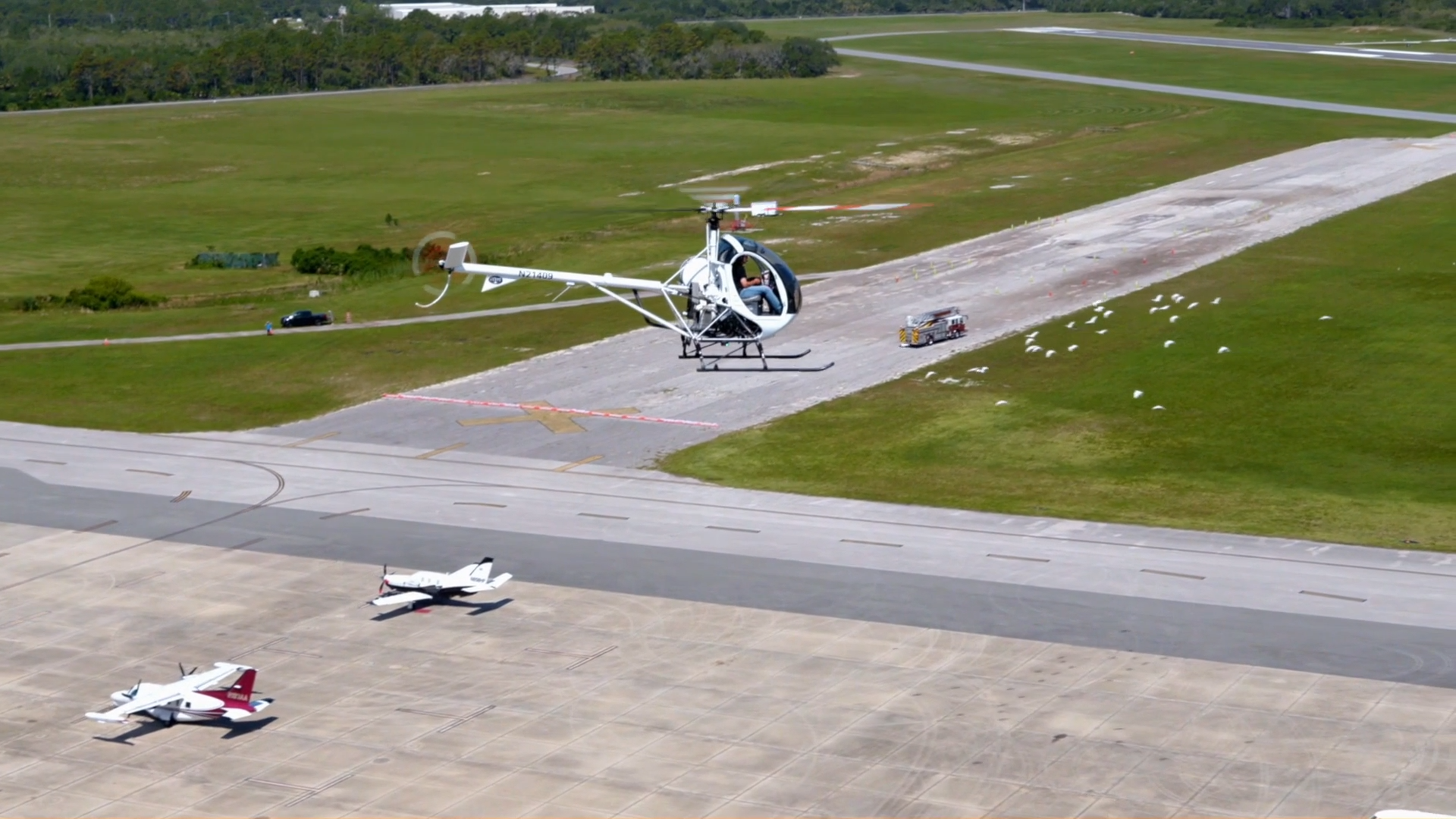
If you are wondering is flying a helicopter hard, start with the hover. The FAA’s own Helicopter Flying Handbook calls hovering the most challenging part of flying a helicopter. The reason is physical: in a hover, the helicopter makes its own gusty air, and that rotor wash pushes against the fuselage and controls. You are always making small corrections just to stay in one place.
New students commonly overcontrol, moving the controls too far and a moment too late. The same handbook notes that overcontrolling fades as proficiency grows, because helicopter controls respond to pressure more than big movements. Learning to hover is mostly your hands and feet finding that out.
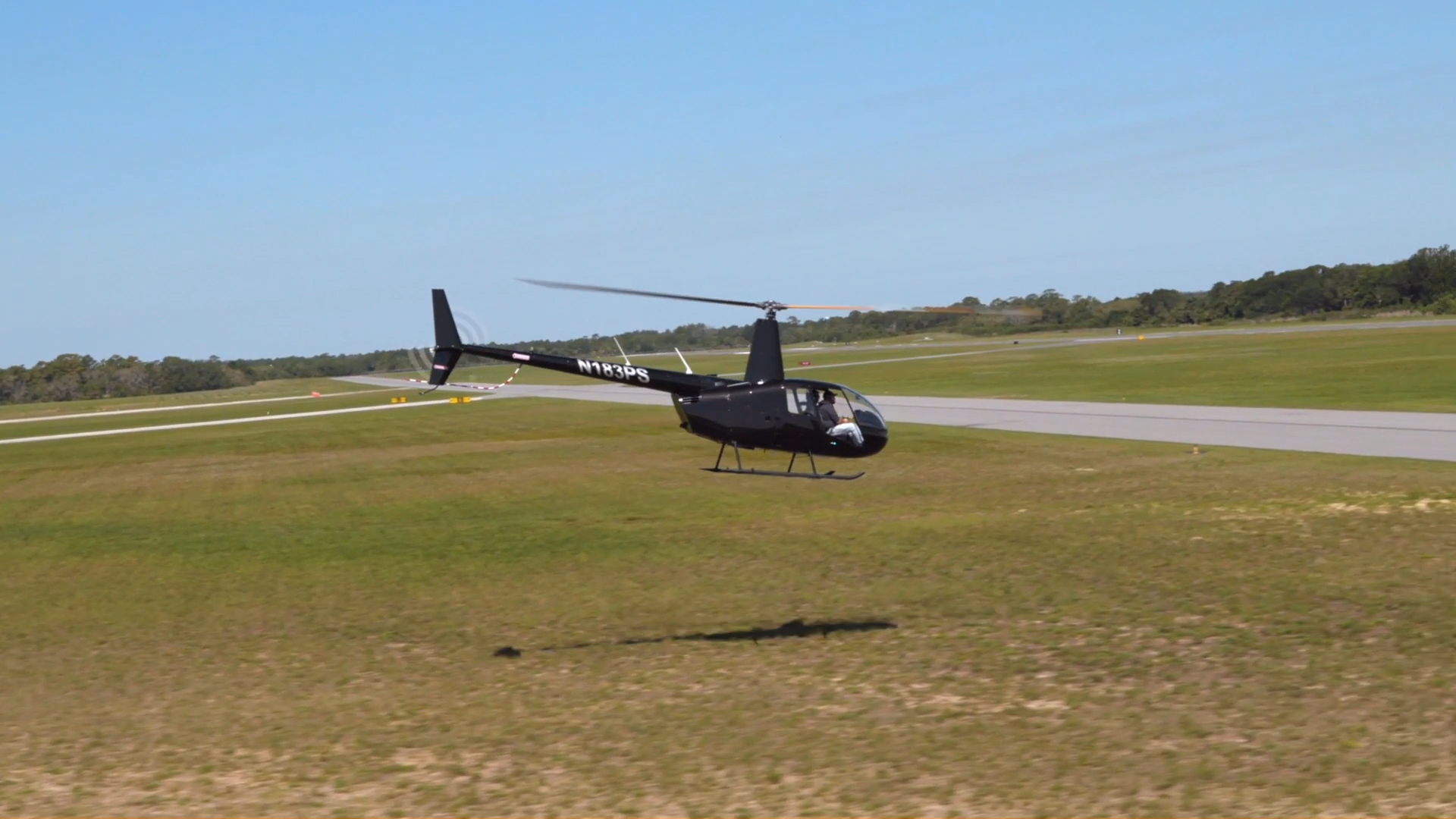
We teach hover and autorotation fundamentals in the Schweizer S300, then add the Robinson R44 for glass avionics, speed and payload. If you want to know how the very first lesson goes, our guide to your first helicopter flight lesson walks through it step by step.
Why the cyclic, collective and pedals feel like one control
Each control has a simple job. The cyclic stops drift and moves you forward, back and sideways. The collective sets your height. The pedals hold your heading. The hard part is that an adjustment to any one of them needs an adjustment to the other two.
The FAA handbook describes the chain. You raise the collective to hold altitude, which adds drag on the rotor blades. To keep rotor speed up you add power, and more power means more torque, so you need more pedal to keep the nose straight. Because a change to any one control calls for a change to the others, the cyclic needs a touch as well. That loop makes hovering feel busy at first. Once your body learns it, the corrections become automatic.
Instructors usually break it down by handing you one control at a time before you hold all three. Our Private Pilot License (Helicopter) course builds coordination step by step, with Aeronautical Decision Making (ADM) taught from your very first lesson.
Autorotations: the maneuver that asks for the most focus
An autorotation is how a helicopter lands without engine power. If the engine stops, a freewheeling unit disconnects it from the main rotor, and air flowing up through the rotor keeps the blades turning as you descend. Every helicopter must demonstrate this capability to be certified, and every helicopter pilot learns to fly it.
You will practice autorotations before your first solo. FAA pre-solo training for helicopters includes hovering and hovering turns, plus simulated emergencies with autorotational descents and a power recovery. In practice, you lower the collective, set up the glide over the field, flare near the ground, then bring power back in and recover to a hover. The FAA handbook calls that power recovery one of the most difficult maneuvers to perform, because you shift from powered flight to autorotation and back again.
You learn it in deliberate steps, with an instructor on the dual controls beside you. Our post on the helicopter private pilot license in Florida covers autorotations, confined areas and slope landings in more detail. If you train in the R44, Robinson helicopters also carry extra FAA rules under SFAR 73, including awareness training and at least 20 hours of R44 flight training before you solo it.
The knowledge test is study work you can plan for
The FAA written exam for a private helicopter certificate is 60 questions in 2 hours, and the passing score is 70 percent. You can take it from age 15. It covers regulations, charts and navigation, radio procedures, weather, density altitude, weight and balance, aerodynamics and systems, and aeronautical decision making.
You prepare through ground training with an instructor or a home-study course, and studying between flights helps the material stick. You can sit the test at our on-site CATS testing center, right where you train.
Plan one timing detail: your passing result has to fall within the 24 calendar months before the month of your checkride.
The checkride has a published standard you can train to
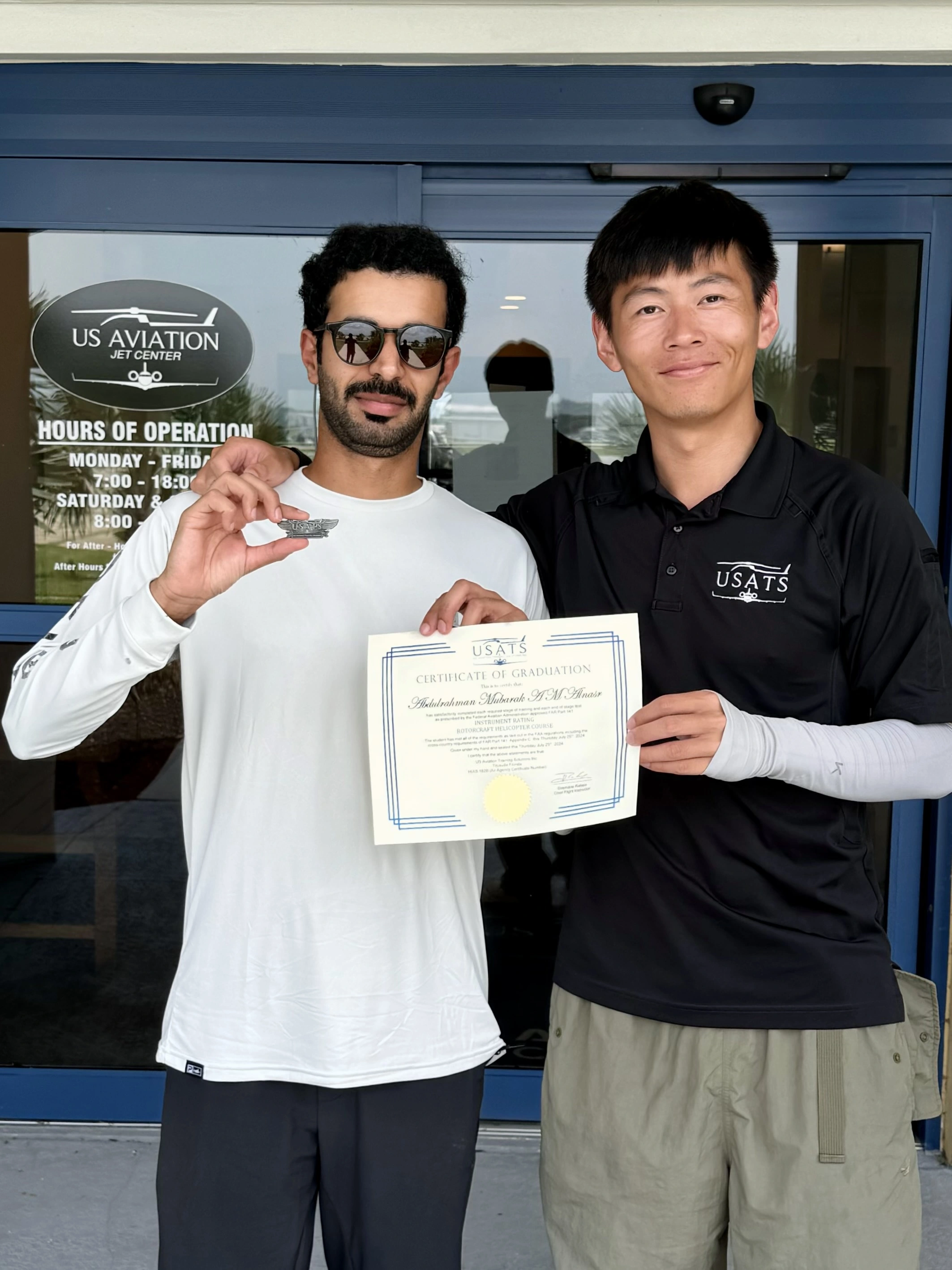
The checkride, or practical test, is with a Designated Pilot Examiner (DPE). It starts with a ground portion of oral questions, which you must pass before the flight begins, and the questions continue through the whole test.
The checkride is easier to prepare for because the standard is written down in advance. The FAA’s Airman Certification Standards (ACS) for the private helicopter certificate set the tolerances. On a vertical takeoff and landing, you hold your position within 4 feet of a designated point with no backward drift and keep your heading within 10 degrees. On a straight-in autorotation, you hold autorotation airspeed within 10 knots and finish with a stabilized hover within 200 feet of the designated point. The test also covers emergencies such as engine failure in a hover, low rotor RPM, dynamic rollover and vortex ring state.
Your instructor trains you to those numbers, then endorses you when you are ready. If a test goes badly, you can retest after more training and a new instructor endorsement. One of our students wrote that his instructor “went out of his way to ensure that I was fully prepared for the check ride.” Compare formats in our Part 141 vs Part 61 helicopter training guide.
The medical is a question to settle early
The FAA medical is a single appointment, but the result is out of your hands, so get it done early. You do not need a medical certificate to take lessons. You need it before you solo, and a third-class medical covers private pilot privileges.
Medicals are issued by an Aviation Medical Examiner (AME). If you have a health question, an AME can tell you where you stand before you invest heavily in training. Our guide to your first FAA medical exam explains what to bring and what happens in the exam room.
Time and money set your pace, so plan them first
The FAA minimum for a private helicopter certificate is 40 hours of flight time, including 20 hours with an instructor and 10 hours solo. A Part 141 approved course is built around 35 hours of flight training. Treat those numbers as a floor. Your real hours depend on how quickly you meet the standard and how steadily you fly.
Consistency is the biggest factor in managing cost and progress. When weeks pass between lessons, hover skills fade and you spend flights earning them back. Year-round flying weather on the Space Coast helps, and our own FAA Part 145 repair station and Robinson Authorized Service Center keep our helicopters maintained on site.
We work with Stratus Financial, AOPA Finance and We Florida Financial, and financing options may be available to qualified applicants through our financing page. Age is the other fixed line: you can solo at 16 and earn the private certificate at 17.
How good training turns a hard skill into a routine one
Each item above gets easier with a structured plan, steady scheduling and patient instructors. One of our helicopter students described our staff as “not only patient but also extremely professional.” The Ghana Air Force wrote that our instructors “assisted the struggling pilots and encouraged the sharp ones.”
Our chief flight instructor has more than 9,000 flight hours across offshore, military and training operations, and our team includes a retired Navy helicopter pilot who holds an FAA helicopter ATP. USATS has trained helicopter pilots since 1987, and you can see every certificate we teach on our helicopter training overview.
Once you hold the private certificate, the next decision is what you want it for. Our post on private vs commercial helicopter license privileges shows what each certificate lets you do.
FAQ
Is flying a helicopter hard?
At first, yes. The FAA calls hovering the most challenging part of flying a helicopter, because each control affects the others. With repetition the corrections become automatic. Our helicopter training FAQ answers more first-timer questions.
How long does it take to learn to hover?
It depends on how often you fly. Frequent lessons close together build the feel faster than the same hours spread over months. Your instructor decides when you are ready based on what you can do. See our helicopter private pilot FAQ.
Is the helicopter knowledge test hard?
It is study work. The test is 60 questions with a 70 percent passing score, and ground training covers every topic. You can test at our CATS testing center.
What happens if I fail my checkride?
You get more training on the weak areas, a new instructor endorsement, and then you retest. Our private pilot course trains you to the published standard first.
Do I need a medical before my first lesson?
No. You need a medical before you solo, with a third-class medical covering private privileges. Book it early, and read our first FAA medical exam guide.
How old do I have to be?
You can take the knowledge test at 15, solo at 16 and earn the private certificate at 17. Our helicopter training overview shows the full path from there.
Find out how hovering feels on a discovery flight
The quickest way to find out how hard a helicopter license will be for you is to feel the controls yourself. On a helicopter discovery flight, you fly with an instructor from KTIX, take the controls in the air and practice hover taxiing. Afterward, we map out the certificates you need and a plan built around your schedule. Book your helicopter discovery flight and take the first step toward your license.