Got
Questions?
Browse our frequently asked questions below to learn more about our flight training programs, admissions process, and what to expect.
Helicopter Pilot Training FAQ | Florida Rotorcraft Training Answers
Whether you are exploring foundational pilot training helicopter courses, seeking commercial pilot helicopter training, or comparing academies for training helicopter pilot candidates, these answers explain how rotorcraft flight instruction works at USATS in Titusville, Florida. For an in-depth roadmap, explore our complete guide to helicopter pilot training in Florida.
When budgeting how much does helicopter pilot training cost, the total investment depends on your target certification level, total flight hours required to reach proficiency, and the training aircraft selected. Key expense components include hourly aircraft rental, dual flight instruction, pre- and post-flight ground briefings, FAA written exams, and designated pilot examiner (DPE) checkride fees. Training in economical piston rotorcraft like our Schweizer S300 keeps hourly operating expenses lower for foundational maneuvers, while transitioning into the Robinson R44 prepares pilots for commercial performance demands. To understand exactly how much for helicopter pilot training your personalized schedule and goals will require, contact our admissions team for a detailed, transparent syllabus quote and aviation financing options.
Comparing how much is helicopter pilot training between Part 141 and Part 61 comes down to flight hour minimums and syllabus pacing. FAA Part 141 programs follow an FAA-audited curriculum with reduced flight hour minimums (35 hours for Private, 115 hours for Commercial), which can lower overall training expenditure for full-time students. Part 61 training requires 40 hours for Private and 150 hours for Commercial, offering maximum scheduling flexibility. In practice, students graduate once achieving practical proficiency, making consistency the biggest factor in managing costs. Learn more in our detailed Part 141 vs. Part 61 Helicopter Training Comparison.
A complete curriculum of training for helicopter pilot careers begins with the Private Pilot License (PPL) to master hovering and basic aerodynamics. Students then advance to the Instrument Rating (IR) for navigating low-visibility conditions, the Commercial Pilot License (CPL) to fly professionally for compensation, and Certified Flight Instructor (CFI/CFII) ratings to build turbine transition hours.
U.S. Army helicopter pilot training is conducted at Fort Novosel (formerly Fort Rucker) in Daleville, Alabama, home of the U.S. Army Aviation Center of Excellence. Military aviators complete their Initial Entry Rotary Wing (IERW) training on military airframes like the UH-72 Lakota. For military aviators transitioning to civilian careers, USATS offers military competency conversion courses to earn FAA Commercial and Instrument rotorcraft certificates, bridging military service with civilian aviation opportunities.
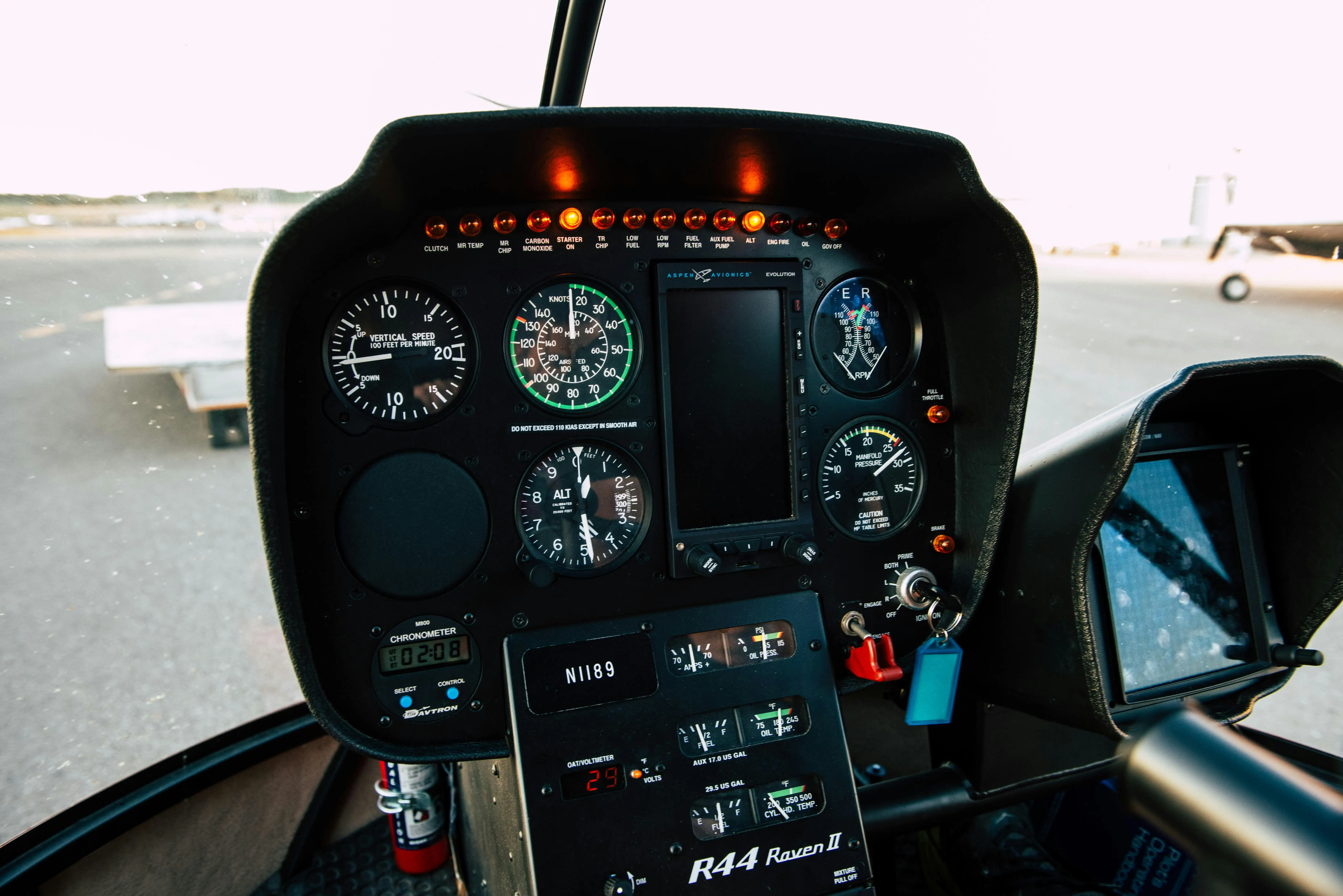
USATS operates a specialized rotorcraft training fleet featuring the Schweizer S300 and the Robinson R44. Working with a dedicated helicopter training pilot instructor in the three-bladed Schweizer S300 teaches nuanced hover control and autorotations, while the Robinson R44 provides glass-cockpit avionics, speed, and payload capacity required by commercial touring and charter operations.
Yes. An introductory discovery flight puts you in the cockpit with a certified instructor, where you will take the controls, practice hover taxiing, and fly along the Space Coast. Every minute is officially logged in an FAA logbook and counts directly toward your license requirements. Read our First Helicopter Flight Lesson Guide for a detailed walkthrough.
Full-time students training 4 to 5 days per week can complete their Private through Commercial Pilot rotorcraft certificates in approximately 10 to 14 months. Part-time students completing 1 to 2 lessons per week generally take between 18 and 24 months. Training in Central Florida ensures over 300 flyable days each year, drastically reducing weather delays.
Private helicopter pilots require at least a third-class FAA medical certificate issued by an Aviation Medical Examiner (AME). Commercial rotorcraft pilots require a second-class medical certificate, and airline transport pilots require a first-class certificate. We recommend completing your medical examination before starting intensive flight lessons.
Graduates with commercial rotorcraft licenses work across diverse sectors including emergency medical services (EMS), law enforcement, aerial firefighting, offshore energy logistics, powerline inspection, executive charter, and flight instruction. Many pilots build their initial 500 to 1,000 flight hours as flight instructors at USATS before stepping into turbine commercial roles.
Yes. USATS trains pilots from more than 120 countries and is authorized under federal law to issue Form I-20 for M-1 student visas. Our team assists with TSA Alien Flight Student Program (AFSP) fingerprinting, on-site FAA testing, and visa documentation.